domenica 26 ottobre 2014

scritto da Chiara Crognoletti

Un’abitazione unifamiliare che produce da sé tre volte l’energia di cui ha bisogno: non stiamo parlando di un pianeta ancora da scoprire, né di un futuro lontano anni luce.
Ci troviamo a Ringdalskogen, Norvegia, dove lo studio di architettura e design Snøhetta ha inaugurato il mese scorso la casa pilota ZEB (Zero Energy Building): in poche parole, un edificio che compensa al 100% le emissioni di anidride carbonica tramite la produzione di energia rinnovabile, la scelta consapevole dei materiali usati e altri accorgimenti preziosi e non banali.
Iniziamo dall’aspetto energetico, sicuramente il più emblematico: il soddisfacimento, anzi il superamento, del fabbisogno dell’edificio è assicurato sia in modo attivo che passivo. I pannelli fotovoltaici e i collettori solari posizionati sul tetto inclinato di 19°, che massimizza l’esposizione solare, uniti all’impianto geotermico, permettono alla struttura di produrre energia sufficiente per sé e per alimentare un’auto elettrica per un anno. Ma non è tutto. Caratteristiche indispensabili sono anche l’orientamento sud-est delle vetrate, la geometria e il volume della casa, l’utilizzo di materiali che riducono la dispersione di calore e di energia.
Il progetto, tuttavia, non si limita a minimizzare l’impatto ambientale, ma prende in considerazione anche parametri non quantificabili: il comfort emotivo e il senso di benessere hanno governato il processo di progettazione nella stessa misura del risparmio energetico.
Lo notiamo dalla zona esterna con camino, dove si può mangiare all’aperto dalla primavera all’autunno inoltrato, dal giardino con doccia e piscina riscaldate dal calore solare, dalla sauna scaldata a legna e da uno spazio esterno per la colazione pavimentato con legno riciclato. Il tutto con l’impiego di materiali a bassa energia e soluzioni tecniche di efficienza energetica.
Infine, il giardino con orto e alberi da frutto permette una produzione di frutta e verdura su piccola scala per soddisfare parte del fabbisogno familiare.
L’edificio sarà costantemente monitorato per verificare se la sua performance risulterà in linea con le stime. Soluzioni innovative di questo tipo sono certamente difficili da implementare su vasta scala, ma il progetto si propone come prototipo per promuovere la ricerca di soluzioni edilizie nel rispetto dell’ambiente, con un design ecologico e sostenibile, che ponga l’accento allo stesso tempo su comfort e benessere emotivo.

Fonte della foto: http://www.architetturaecosostenibile.it/architettura/progetti/in-europa/casa-zeb-sostenibile-085
written by Lucrezia Zito


Image a fairy-tale Kasbah from a Thousand and One Nights, a castle of clay, salt and sand.
Arriving at a forecourt you find yourself surrounded by high clay walls with openings through candlelight can be seen flickering in the distance. Above you the Milky Way shines in the blue-black sky. Absolute silence. You can hear the stars.

This is the paradise built by Sir Monir Neamatalla, Adrère Amellal , white mountain in Arabic, a luxurious eco-lodge, located in the Siwa Oasis , in Egypt.
Here, there is no electricity and mobiles, apart from the rooms, are prohibited. The buildings are in traditional Siwan style, the furnitures are made from palms or solid blocks of salt and the candles that light at night the rooms  are pure beeswax.

The creator of this secret place, Dr Neamatalla, after his degree in chemical engineering obtained a doctorate in Environmental Health and Quality Management from Columbia University. “Engineering wasn’t really my passion”, he revealed during an interview for Cairo Agenda, “So I made the shift. I have always been more interested in social issues and the state of mankind”.
Founder and President of Environmental Quality International ( EQI), one of the Egyptian leading development consulting firms, Dr Neamatalla turned a utopian vision into a profitable investment, the result? The Siwa Eco-lodge.  With this Hotel he showed that it is possible to manage resources successfully, integrate people from the surrounding area into the project and at the same respect nature and the region cultural heritage. Mr Neamatalla has facilitated the development of micro-enterprise in the area and he has taken part in the governance and at the meantime has established a successful business.
So, it is no coincidence that Adrère Amellal has been seen as an initiative of sustainable development and it has received many prestigious awards from well-know Institutions such as the International Chamber of Commerce and UNDP (World Business Award for the Siwa Initiative 2006).

However, the development of Siwa trough the Eco-lodge is not only attributable to Dr Neamatalla. The local community, the eleven tribes of Siwa and the local authority play all a fundamental role in this process. Only in this way, with an active contribution of all the stakeholders involved in the region, has been possible to realize the mission and guard the evolution of the oasis.
Sewa has become now a symbol of an advanced community that has learnt the worth of wise management of environmental resource and clean energies.

venerdì 24 ottobre 2014

scritto da Emanuela Piccoli

Negli ultimi tempi abbiamo assistito ad una preoccupazione crescente, da parte dei consumatori, verso ciò che arriva sulle loro tavole. Oggi i consumatori vanno alla ricerca della qualità del cibo e, di conseguenza, c’è più attenzione alla filiera corta, al biologico e all’ecosostenibilità. I presidi slow food (come Eataly) tentano di promuovere questi temi e ottengono feedback positivi dai consumatori. Molti consumatori tentano persino di coltivare il proprio cibo, se hanno la fortuna di vivere in campagna o hanno il proprio orticello. La vita in città rende difficile, però, implementare questo tipo di attività.
A questo scopo lo Studio belga Segers ha pensato ad un’unità giardiniera chiamata “ Daily Needs Modular Chicken Coop and Garden ”, che consente ai cittadini di coltivare verdura, allevare polli o altri animali, fare il compost e riporre gli attrezzi. E’ una struttura flessibile perché le varie componenti possono essere collocate secondo le proprie esigenze.
Questa struttura si serve di legno naturale proveniente da fonti sostenibili, un contenitore per il recupero dell’acqua piovana e, per di più, i vari moduli sono facili da assemblare: si ottiene così una perfetta mini- fattoria da tenere in giardino o sul balcone. Questo progetto è talmente innovativo da essere stato nominato vincitore nel 2013 dell’“Ovam Ecodesign Award Pro”.
Il risultato? Uova fresche e verdure di stagione a km zero, sostenibili e bio. Buon giardinaggio!

fonte dell'immagine: http://www.notcot.org

venerdì 17 ottobre 2014

scritto da Costanza Gabbrielli

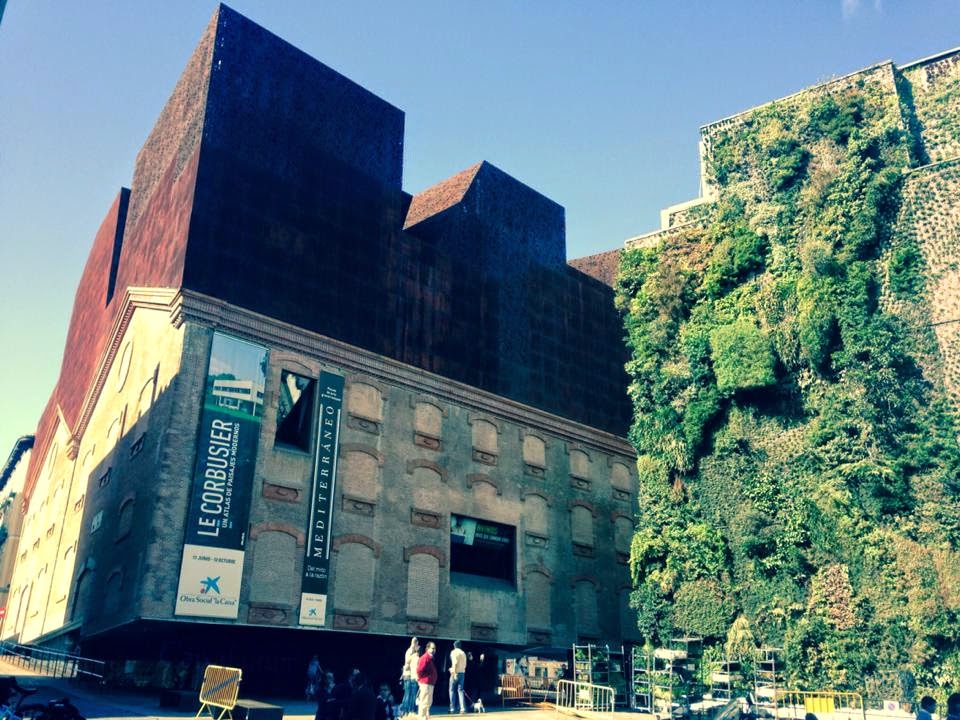
In un'epoca quale la nostra in cui regnano sovrani i social network, molto spesso ci troviamo ad essere informati da questi su notizie di attualità altrimenti normalmente apprese da riviste, quotidiani, Tg e quant'altro. Ed è proprio grazie ad uno di questi "media", Instagram nello specifico, che sono venuta a conoscenza di quello che ha ispirato la stesura di quest'articolo: il green wall di Madrid.

Trovandomi nella suddetta città per l'Exchange Program, sono andata alla scoperta di tale muro coperto di vegetazione, che ha sede lungo il Paseo del Prado. Si dà il caso che questa sia una delle vie più suggestive nonché importanti della città dal momento che racchiude in sé il cosiddetto "triangolo d'arte di Madrid", ossia i tre più celebri musei della città: Prado, Reina Sofia e Thyssen-Bornemisza.
In questo quadro d'arte e bellezza è posto il vertical garden disegnato dal botanico francese Patrick Blan. Nonostante l'inventore del vertical garden sia l'americano Stanley Hart White, è a Blanc che si deve la modernizzazione e diffusione del green wall. Il traguardo di Blanc è considerato anche il 15º target del progetto "Haute Qualité Environnementale". Quest'ultimo altro non è che uno standard per il green building in Francia, basato sui principi dello sviluppo sostenibile fissati all'Earth Summit del 1992.
Il contesto d'arte in cui è inserito il green wall non termina con quanto detto sopra: esso è posto di fianco al Caixa Forum, museo e centro culturale in cui sino al giorno della mia visita era in corso una mostra di Le Corbusier, il quale è stato uno dei primi a considerare il contesto naturalistico in cui immettere gli edifici, quindi uno dei primi a interessarsi dell'armonia tra natura e urbanistica; tale tema emerge chiaramente nel corso dell'esposizione, che rappresentava una panoramica del lavoro dell'artista.
Al termine della mia visita non ho potuto resistere al classico giro nel museum shop e non ho altresì potuto trattenermi dall'acquistare una matita interamente ricoperta di finta vegetazione - non a caso denominata "Moss Pencil"- disegnata dal designer thailandese Sirampuch Eamumpai, e vincitrice del RedDot Design Award 2008.

Alla luce di tutto ciò, vorrei concludere con l'augurio che il green building possa essere considerato sempre più progresso culturale e che la sua diffusione veda una costante ascesa.


mercoledì 15 ottobre 2014

Written by Carlotta Werth

Think of an environmentalist. Is he, or she, a mix between an anarchist and a hippy, waving a shield with pictures of dead animals and red blood-like writings? Screaming and shouting, standing on top of a boat in some exotic sea? Fighting against multinationals, overfishing, mass extintion?
We should all be thankful towards those people -they are real heroes-, but, believe it or not, when it comes to being sustainable, there's a lot more than that.
What if I told you that sheikhs -those men walking around with thick black beards, long tunics, heads covered by white pieces of cloth, eating no pork meat, and praying several times a day- are the world's new environmentalists?
It should't surprise you: this is simply one of the many cases where mental sharpness meets with sustainability.
Suppose you owned a lot of oil, and had a lot of money. Suppose you knew these reserves would only last about 40 years. What can you do, today? The options are two: 1. Enjoy life and spend all your money, and then, well, you'll let your children and grandsons figure out what to do in order to survive. 2. Gather some of your huge amount of money and build an empire. Something that will last for decades. Something innovaitve, efficient, autonomous. A world wide model. That will secure you, and your children, and your grandsons, and many more to come, an amazing life.
The latter has been the choice of the United Arab Emirates' sheikhs, when they decided to build Masdar City (littlerally, “the source”): a 100% renewable city.
Located in Abu Dhabi, a few minutes drive from the international airport, it was designed by the British architectural firm Foster and Partners. Once construction is completed -bewteen 2020 and 2025-, Masdar will be home to over 40,000 people.

Be ambitious. Think big.
Masdar City is planning to become not just one of the many green cities of the future, but the global model and the largest world lab for renewable energy.
How?

Take a look at the following points.

1) Architechture
The design of the city is a wonderful combination of ancient Arabic architecture and modern technolgy.
Drawing inspiration from old Arabic cities, the streets are narrow and shaded. The city is oriented in such a way that it gets the maximum possible shade all day long. This way, Masdar City is 10 degrees Celcius cooler than downtown Abu Dhabi.
At the same time, the building's energy and water needs have been reduced by 40%.
Construction materials are entirely bought from local suppliers and manufacturers.
But even more stunning is the city's recycle center. This place is huge: basically all of the waste from construction is being reused. Experts came up with innovative soultions, for example, plastic waste it is used to produce new furniture.

2) Control over the whole value chain
Core to Masdar city is its super advanced Instute of science and techonolgy. This university is dedicated to developing the “theory” in the fields of energy and sustainability. This theory is then put into practice and tested by the city. The optimal solution is found. Ad commercialized.
This way, Masdar is going to have control of the entire value chian of green energy .

3) Solar energy
What source of energy should a desert rely on? The answer is pretty clear: sun.
Masdar City uses a mixture of two technologies to overcome the issue of cooling its buildings. On the one hand, it uses concentrated solar power: concave mirrors reflecting the light in one spot, where the temperature reaches 400 degrees Celcius. They are very powerful, but expensive. For this reason, it also uses “vacuum panels” -which look like traditional solar panels-, they are somewhat less powerful, but more convenient.
To meet other energitic needs, a huge fotovoltaic field has been built, in the desert besides the city. And, of course, the roofs of the buildings are equipped with solar panels, which alone produce 1/3 of the entire energy labs, offices and homes need.

4) Transportation
Here comes the coolest part of all. The city is going to be entirely pedestrian and cyclist friendly. How? Vehicles are only allowed underground. These sort of cars, called " Personal Rapid Transit" , work on electric power produced by fotovoltaic. They are driverless, operated -through wifi- from a single central location. Also, those PRTs can be used on any road, so that inhabitants can drive to wherever they wish.

5) Fascinated by the project? Take part of it.
Even though the majority of capital is provided by the Governement of Abu Dhabi, Masdar is welcoming foreign investors.
But that's not all. If you like to think green, you should consider establishing a business in the city. The opportunities offered are unbelievable. First of all, close collaboration with the advanced renawble energy research institute. Secondly, the city allows 100% foreign ownership, 0 currency restrictions, 0% import tariffs, and no limitations on capital movements. Last but not least, it offers the astonishing rate of 0% corporate and individual taxes.

After having read about such an amazing project, one question arises: are there any downsides?
Apparently, there seems to be just one. As Greenpeace pointed out, the project is worth of support, but it would be better to focus on fixing already existing cities, rather than building many new ones from scratch. On top of that, solar panel fields take up a lot of space, spoiling the beauty of many natural landscapes. But, on the other hand, a solar panel field is always more pleasant at sight -and way safer- than any huge nuclear or water-powered plant.

Foresighted. This is the appropriate word to describe today's oil tycoons. They are going to keep that wealth they have accumulated, and they'll add much more to it.
Someone aiming to a thriving future can't just passively rely on the past. And that future, they want to hold it in their hands.

lunedì 13 ottobre 2014

scritto da Fei Fei


Sono stati giorni intensi e pieni di emozioni a Stoccolma per l'annuale cerimonia della consegna dei Nobel. Quest'anno il premio per la fisica è stata assegnata ai ricercatori giapponesi Isamu Akasaki, Hiroshi Amano e all'americano di origine giapponese Shuji Nakamura “per l'invenzione di diodi efficienti che emettano luce blu, che ha permesso lo sviluppo di sorgenti di luce bianca luminose ed energicamente economiche. L'implicazione ambientale ed economica di questa rivoluzionaria tecnologia Led a luce blu in grado di generare una sorgente di luce bianca ad alta efficienza luminosa ha ben motivato la decisione della Commissione.
Ma quel è il risparmio promesso dalla tecnologia Led?
Facciamo un passo indietro, torniamo fino 1878 quando Thomas Alva Edison aveva perfezionato il primo modello di lampadina a incandescenza ed illuminato il XX secolo. In queste lampadine, ormai messe fuori commercio in molti paesi, la luce veniva emesso da un filo di tungsteno reso incandescente dal passaggio di corrente. Inevitabilmente parte dell'energia in entrata veniva dispersa sotto forma di calore rendendo queste lampadine in realtà poco efficienti.
In seguito comparvero le lampadine a fluorescenza in cui l'illuminazione veniva generato da un differenziale di potenziale tra due elettrodi immersi in un gas. Questo sistema permetteva un risparmio energetico significativo ma non rivoluzionario quanto la tecnologia Led.
I Led esisteva già negli anni 60 ma allora erano in circolazione solo diodi a luce rossa e verde, incapaci di generare luce bianca. Negli anni 90 i ricercatori Akasaki, Amano e Nakamura finalmente riuscirono dove molti avevano fallito, trovarono i materiali giusti per fabbricare i diodi a luce blu. Ora combinando i led rossi, verdi e blu è possibile ottenere la luce bianca.
Se le lampadine tradizionali possono raggiungere un rapporto lumen/watt, ovvero tra il flusso luminoso in uscita e quello in entrata di 16, quelle a fluorescenza 70, i Led arrivano a 300. Inoltre i sistemi Led hanno una durata di vita che può arrivare fino 100 000 ore, 10 e 100 volte in più rispetto alle lampadine a fluorescenza e a tungsteno rispettivamente. I risparmi a livello ambientale sono notevoli. Infine è bene ricordare anche che 1,5 miliardi di persone che attualmente non hanno accesso alla rete elettrica potranno usufruire dell'illuminazione Led: essendo una tecnologia poco energivora questa può essere nutrita dall'energia solare locale.

Quindi un rispettoso applauso ai tre ricercatori!

sabato 11 ottobre 2014

scritto da Maria Carolina de Vera

Il mondo della raccolta differenziata è un mondo che probabilmente non è tra i più conturbanti ed attraenti, ma i numeri e i guadagni che si possono fare in questo settore sono decisamente interessanti. Lunedì a Milano l'associazione Amici della Terra ha tenuto la Conferenza Nazionale dei Rifiuti, un evento che ha visto operatori del settore susseguirsi nell'approfondimento del tema.
Interessante il confronto tra come funzionano le cose in Italia e come funzionano le cose nei paesi d'avanguardia del nord Europa. Questi ultimi, rispettando il dettato comunitario di conferire il meno possibile i propri rifiuti in discarica, "giocano" con un mix di riciclo e termovalorizzatori che forse rappresenta anche per noi l'unica soluzione per uscire dalle situazioni d'emergenza che abbiamo. Per chi non lo sapesse, le situazioni critiche in tema di rifiuti urbani riguardano la maggioranza delle nostre regioni (vedi tabella). In presenza di regioni che non sono autonome nello smaltimento dei propri rifiuti ma devono continuamente affidarsi ad altre regioni o addirittura paesi esteri per ovviare al problema, denota un quadro che richiede intervento ed evoluzioni ulteriori.

Se si riprendono gli obiettivi europei al 2030, si vede comunque come il riutilizzo e il ricilaggio rappresentino i meccanismi migliori per ovviare allo smaltimento dei rifiuti, con una percentuale che per ogni paese deve arrivare al 70% della quantità dei rifiuti prodotti.


Giusto per dare qualche indicazione più precisa su cosa effettivamente può comportare il riciclo, può essere utile vedere qualche esempio di quanto e che cosa si risparmia producendo beni con materiale precedentemente scartato.

1) Raccolta di carta e cartone

Identikit di 1 TONNELLATA DI CARTA prodotta da CARTA RICICLATA
litri d'acqua necessari: 1.800
energia elettrica necessaria: 2.700 kWh

Identikit di 1 TONNELLATA di CARTA VERGINE

litri d'acqua necessari: 440.000
energia elettrica necessaria: 7.600 Kwh
+ abbattimento di 15 alberi

Il XVII rapporto annuale di Comieco ricorda che "il riciclo di carta e cartone è un vero fiore all’occhiello della green economy italiana". I benefici economici non sono assolutamente irrilevanti, visto che quelli che il sistema ha prodotto nel 2011 sono pari a 478 milioni di euro e quelli prodotti dal 1999 al 2011 sono circa 4 miliardi di euro. Nello stesso periodo, grazie ai risultati della raccolta differenziata, si è anche evitata la costruzione di ben 248 nuove discariche.

2) Raccolta dell'alluminio

Identikit di 1kg di ALLUMINIO ottenuto da ALLUMINIO RICICLATO
energia necessaria: 0,7 kWh
proprietà: le stesse di quelle dell'alluminio nuovo

Identikit di 1kg di ALLUMINIO NUOVO
energia necessaria: 14 kWh

3) Raccolta della plastica

Scenario n°1: 10 anni di smaltimento della plastica tra i prodotti indifferenziati
Scenario n°2: 10 anni di riciclo della plastica.

Con lo scenario 2, che è quello che realmente si è realizzato e secondo uno studio della società di consulenza Althesys, si è realizzato un beneficio incrementale di 4,6 miliardi di euro per il recupero degli imballaggi di plastica. A fronte degli oneri necessari per organizzare la raccolta differenziata, la raccolta-riciclo ha permesso l'evitata immissione di 8,2 milioni di tonnellate di anidride carbonica, un risparmio di 418,5 milioni di euro per l'evitato smaltimento e si sono recuperati materiali per 493,7 milioni di euro.
Per chi avesse ancora problemi nella corretta separazione dei rifiuti, il seguente breve video vi può dare una mano. Buona visione!


fonte della tabella : Hera Ambiente

mercoledì 8 ottobre 2014

written by Valentina Rutigliano


In this breezy and rainy autumnal day I would like to share with you this video that I just happened to come across while looking up information about Zero Impact on LifeGate.
But let’s go in order. Nature is speaking is a campaign launched by the American NGO Conservation International with the aim of highlighting a simple truth: Nature doesn’t need people, but rather the other way around. A few Hollywood actors have lent their voices (quite literally, in this case) to some of the most important forces of nature – Mother Nature itself, the Ocean, the Water, the Soil, the Redwood, the Rainforest. In the end I chose Kevin Spacey giving voice to the Rainforest, and one reason – I must admit -  is undoubtedly that he is one of my favourite actors. What hit me most is the derisive, mocking tone with which the Forest points out how we can’t really do without its survival: “Humans…they are so smart,  so smart! They know how to make things, amazing things. Now, why would they need an old forest like me anymore? Well, they do breath air: and I make air. Have they thought about that? Humans…so smart”.
The second – but perhaps more important - reason is that by accident forests were exactly the object of the research I was carrying out before getting trapped in the Nature is speaking videos -  seriously, you can’t help watching them all.

Let us now get back to Zero Impact. With its events and its presence on social networks, LifeGate supports the community in sharing ideas and enhances awareness about social and environmental issues. It is also a benchmark for the increasing number of companies that are trying to pursuit a sustainable development by offering consulting, communication projects, supply of renewable energy and projects to increase energetic efficiency.
One of the most interesting and cutting-edge projects that LifeGate is carrying on is in fact Zero Impact . It is about calculating, reducing and compensating the CO2 emissions released by production processes or events. First, emissions are cut thanks to the use of more efficient technologies and ecological materials, which in most cases also reduces costs. Compensation consists in the purchase of carbon credits, or greenhouse emissions allowances, generated through activities of creation and safeguard of forests and natural reserves. The key point is to offset the emissions with the quantity of carbon dioxide that the planted trees are able to absorb. Furthermore, using GPS, it is also possible to trace the very position of the reforested areas. Zero Impact is not meant as a definitive solution to fight greenhouse effect, but Kyoto protocol and several pieces of research have confirmed the value of reforestation against climate change.
Through the implementation of the model “People, Planet and Profit” LifeGate, that is a limited company, wants to prove that environmental issues are not necessarily for NGOs or volunteers, but on the contrary it is effectively possible and desirable to conciliate sustainability and profitable economic activity.

Speakers :
• Stefano Gatti (moderator) - Director MBA, SDA Bocconi School of Management;
• Franco Hauri - Director, Climate Change Capital Private Equity;
• Gianluca Massimi - Senior Structured Finance Officer, Climate Change and Environment Division (NPST), European Investment Bank;
• Alessandro Steffanoni - Project Finance, Servizio Finanza d'Impresa Banca popolare Emilia Romagna;
• Enrico Zini - Associate, Greentech Capital Advisors.

Description :
The conference “Green Project Financing: Investing in a sustainable future” ­focused on green investments to understand how companies obtain funds in order to undertake sustainable projects and how banks finance these firms to manage green investments. In particular, the attention was put on the added value that can be obtained from these investments and on the competitive and strategic advantages of this sector.
The event took the form of a roundtable, moderated by Professor Stefano Gatti, during which the speakers illustrated the peculiarities of green investments (performance, risk and best practices adopted in the investment process) and analyzed evolutions in the financial sector resulting from the increasing demand for green investments.
The aim was to present and to explain concrete experiences, best practices and the possible approaches to finance green investments to shed the light on the challenges and opportunities at stake. The environmental and social consequences of these projects were considered with a European perspective, with particular attention to the Italian context.


mercoledì 1 ottobre 2014

Written by Chiara Crognoletti

We have only one planet, but we would need one and a half to sustain our current ecological footprint. This is the recent result highlighted in the Living Planet Report 2014, the annual analysis on the health of our planet published by WWF.


When we speak of ecological footprint, we mean the land and marine area necessary to regenerate the resources used by human beings and to absorb their waste. For more than 40 years, humanity’s demand on nature has exceeded what our planet can replenish. This year, the Earth Overshoot Day was 19th August: it means that in the first 8 months of 2014, we consumed the resources produced by our planet for the whole year and after that day we began borrowing from future generations.
Another figure that jumps out is the path of the Living Planet Index over the last 40 years: this measure shows the trends in thousands of vertebrate species populations, which declined by 52% between 1970 and 2010. In other words, the number of mammals, birds, reptiles, amphibians and fish across the globe is, on average, about half the size it was 40 years ago.
However, not all the countries have the same ecological footprint: poorer countries have the smallest one, but they suffer higher losses in biodiversity, since high-income countries rely on their biocapacity to support their lifestyles. As a consequence, high-income countries show an increase in biodiversity, while low-income countries show dramatic and marked declines.
When considering this data, we should remember a very well-known proverb: We do not inherit the Earth from our ancestors; we borrow it from our children. World population is growing at a fast rate and it is projected to reach 9.2 billion in 2050. Forest ecosystems provide shelter, livelihoods, water, food and fuel security to more than 2 billion people. Food production accounts for around 70% of water use and 30% of energy use globally. One-third of the planet’s major cities depend on nature reserves for their drinking water. Global freshwater demand is projected to exceed current supply by more than 40%. At the moment 768 million people don’t have a safe, clean water supply.
These are all good reasons why we should care for our planet and we cannot ignore our impact. And maybe nothing is (still) lost: WWF’s “One Planet Perspective” outlines better choices for managing, using and sharing natural resources within the planet’s limitations.

Here are its 5 points:
Preserve natural capital: restore damaged ecosystems and expand protected areas;
Produce better: reduce inputs and waste, manage resources sustainably, scale-up renewable energy production;
Consume more wisely: through low-Footprint lifestyles and sustainable energy use;
Redirect financial flows: value nature, account for environmental and social costs, support and reward conservation, sustainable resource management and innovation;
Equitable resource governance: share available resources, make fair and ecologically informed choices, measure success beyond GDP.
I would like to conclude with the encouraging words of Marco Lambertini, General Director of WWF International: he states that “we are all connected – and collectively, we have the potential to find and adopt the solutions that will safeguard the future of this, our one and only planet”.