venerdì 28 novembre 2014

written by Carlotta Werth

Science fiction is becoming reality. In 2014, we will buy 2.5 billion mobiles, computers and tablets. And soon, there will be more technological devices than human beings on Earth.
We use them every day. Wherever we go, they are with us. But we don't even really know what they are made of, how they are produced, what happens when they die.
I decided to find out something more about the life cycle of our technological devices. And I came across some creepy truths.
The first issue arises even before factories give "birth" to electronics products. It happens all the way down in Africa.
One of the main reasons for the bloody war in Congo is profit from the mineral trade. Those minerals are used to produce our mobiles, tablets and computers. The armed groups trading the metals consistently use brutal violence to keep miners in a situation of almost slavery. Mass rape is used as a strategy to intimidate the locals. This way, they can secure themselves control of mines and strategic areas. I you want to learn more about the conflict, click here and here .
The mineral supply chain is not transparent, and companies-consequently also consumers- often have no way to understand whether the products they purchase are financing the conflicts. For this reason, the GeSi (Hp, Microsoft, Huawei, Nokia are among the members) launched the Conflict-Free Smelter Program: the aim is that of enabling ICT companies to source responsibly and get rid of blood minerals.
Afterwards, the “birth” phase takes place. This happens far east, in Chinese factories.
The processes to manufacture tech devices are complex and chemically intensive. Problem is, safety standards and environmental regulations in China are weak. Reports show how factories manufacturing electronics use chemicals that can cause nerve damage, cancer, birth defects and miscarriages. Both the labourers and the local communities are exposed to these dangers. Greenpeace found factories dumping the hazardous chemicals into local waterways, along with frequent workplace poisonings.
But even if Chinese factories operated with western standards, one issue would persist: the carbon footprint. 60% of the total CO2 tech devices produce over their whole lifespan comes from manufacturing.
Because ICT firms outsource manufacturing to independent, unknown companies, they can say they ignore how their suppliers operate.
At this point, electronics devices are ready to start their short lives. Ready to be used, to be carried in our pockets, held in our hands, laid on our ears. And in spite of this, we don't even know what's in them.
36 models belonging to 10 major companies were disassembled and analysed by HealthyStuff.org. 100% were found containing chemical hazards: PVC, BFR and heavy metals such as mercury, chlorine, lead, cadmium and bromine.
Surprisingly, those substances don't appear to be hazardous for users. As funny as it might be, it is exactly during their life, that our mobiles, tablets and laptops produce the least damage to the environment and our health. So, the most logical conclusion is that we should use them, those devices, as long as we can.
I know. That's not what tech companies want you to do. No matter whether it is still perfectly functioning, after just a couple of years, you only want to get rid of that embarrassing, Palaeolithic mobile phone.
So, you throw your device in the bin. It's dead. And this is when it causes the greatest environmental damage.
Most of the e-waste ends up in the landfill. Here, the toxic chemicals leach into the land, the water, and the atmosphere, contaminating the food we eat and the air we breathe.
Other e-waste is incinerated. This way PVC, BFR, and toxic heavy metals such as mercury are released into the air.
Even worse, huge amounts are illegally exported to developing countries. There, in scrap yards, small children use their hands to disassemble electronic waste, in search for valuable substances such as gold, copper, iron, silicon and nickel.
There is some hope, though. Most of what is labelled as e-waste is actually not waste. Many parts could be reused or recycled. But this has to be done in purpose-built plants under controlled conditions. Also, to make recycling easier, electronics companies should work hard to reduce the chemical hazards contained in their devices.
What firms are doing better? Greenpeace filled out a ranking: so far, the companies that acted on their commitments to eliminate PVC and BRFs are Apple, Nokia, Sony Ericsson, RIM, LGE, Samsung, Acer and Philips.
Some made promises but haven't taken action so far, while others haven't even disclosed clear plans yet. If you are interested in finding out who is misbehaving, click here .
Hope you'll think about it twice, next time you buy a new smartphone.

domenica 23 novembre 2014

made byChristian Schnettelker , www.manoftaste.de


Valentina Rutigliano
Blogger and part of the blog management
2nd year of BIEMF


Carlotta Werth
2nd year of BIEMF


Chiara Crognoletti
1st year of Finance


Federica Guerra
1st year of EMIT, the Msc in Economics and mangament of Innovation and Technology


Lucrezia Zito
3rd year of CLEAM


Jona Shedu
1st year of Des, the degree in Economic and Social Science


Silvia Pennazzi Catalani
1st year of CLAPI


sabato 22 novembre 2014

written by Emanuela Piccoli

In the past years episodes of heavy rainfalls occured in some areas of Italy. Everyone is aware of their effects: flooding and landslides. Such events always have brought great discomfort and tragedy among citizens. The purpose of this article is to discuss the connection between global overheating and heavy rainfalls.
Convection currents are at basis of every rainfall: hot water evaporates from the sea to the atmosphere and then, when it is too cold, it condenses and falls as rain. Such a process is subject to changes due to different chemical and physical conditions, like sea temperature. In fact, warmer seas lead to greater amounts of water evaporating and, thus, to heavier precipitations.
The number of intense precipitation events has been slowly increasing during the past 50 years in the U.S. Researchers coming from the University of Miami found out that heat-trapping gases, like carbon dioxide (CO2), may contribute to heavier rainfall and, therefore, scientists reject the idea of rainfall due to natural variations in climate.
However logic the conclusion of scientists might seem, their analysis focuses on too ashort period of time. Further pieces of research are needed to strengthen their thesis.

Fonte: http://www.climatecentral.org/news/human-connection-to-precipitation-extremes-studies-say

venerdì 21 novembre 2014

written by Chiara Crognoletti

Barack Obama has defined the recent declarations on climate change a historical agreement between USA and China. In fact, during the last APEC Summit (Asia Pacific Economic Cooperation) in Beijing, the leaders of the two most polluting countries in the world have finally reached a decision aimed at reducing greenhouse gas emissions and limiting the dramatic consequences of climate change.
At the moment, scientists insist on the inadequacy of the current policies in maintaining the increase in global temperature within 2°C: further action is required if we want to save the planet from unprecedented transformations that would terribly impact on wildlife and human health.
At the moment, USA and China are producing 45% of global emissions and this is the first time the Chinese government decides to take action against climate change: although it still refuses to be classified as an industrialized country, China is worried about its polluted cities and it will start reducing its emissions by 2030, when sources of clean energy, such as solar and wind power, could provide 20% of the energy demand. On the other side, USA will reduce its emissions by 25-28% by 2025.
The historical agreement between these two opposite blocks is the outcome of nine months of secret negotiations which could pave the way for an effective global action:  the handshake between Barack Obama and Xi Jinping is a message of hope for the next Cop20 in Lima (starting next December) and the conference in Paris in 2015, where an ambitious project against climate change could be finally presented and put in place.


Sources:


written by Stefano Zenobi

Last Monday, 17th November, the twenty-sixth meeting of the parties to the Montreal Protocol on Substances that Deplete the Ozone layer has started in Paris. This is something that is likely to be neglected by media and public attention given the amazing results of the phase out of Ozone Depleting Substances (ODS) realized during the past years and the more urgent and critical climate change issue. Yet, an amendment proposed by the Federated States of Micronesia may make the meeting an historical turning point both for ozone protection and for climate change mitigation.
Before getting to the point it is worthy to get the Montreal Protocol better. The Montreal Protocol (1987) is the direct follower of the Vienna Convention for the protection of the Ozone layer (1985). The Vienna Convention acts as a framework for the ozone protection and it is not legally binding for the countries. The practical phase out is thus left to the Montreal Protocol which comprises a fewer number of countries. These two treaties are mile stones in the history of multilateral environmental agreement and the most successful treaties of all the time as they were ratified by 196 countries so becoming the first universally ratified treaties in the history of the United Nations.
The Montreal Protocol has been an effective mechanism for the phasing out of ODSs; in 2010 already scientists found that the ozone layer was not depleting any further and they were expecting the recovery to start. The strategy of the Protocol has been simple. Developed countries committed into starting the phasing out of the ODSs while developing countries were given more time for that. The ratio was that developed countries had the capabilities to developed new, alternative technologies. Later on, developing countries could adopt them reducing their dependence on ODSs in a cost effective way also helped by the financial support of the developed countries of the Montreal Protocol. This has proven to be very effective and nowadays it became the model for all sorts of agreements of this type.
As mentioned before, the Montreal Protocol has been effective in phasing out the ODSs. HCFC and CFC (hydrochlorofluorocarbons and chlorofluorocarbons) are no longer included in most of the products available in the market. However, those products are still necessary for our daily life; they are, in a broader sense, refrigeration and air conditioning technologies. Practically speaking, ODSs have been substituted with other artificial refrigerants, among them the HFC (hydrofluorocarbons). However, it happens to be that HFC are weak ozone depleting substances but powerful greenhouse gases. In fact, HFC have a warming potential which is thousands of times higher than the carbon dioxide one and their production, consumption and emissions are expected to grow rapidly, reaching levels in 2050 10 times higher than the present. The Federated States of Micronesia is proposing to include the phase down of HFC under the scope of the Montreal Protocol for ozone protection.
The goal of the amendment is hence that the effectiveness of the Protocol will work also in this case and thus benefitting the ozone layer protection but mainly the climate change mitigation. The capabilities, the institutions and the people are already available for this. There is the potential for the Paris meeting to become the first significant step in the worldwide fight against climate change.


martedì 18 novembre 2014

scritto da Federica Guerra

Che cos’hanno in comune l’erosione delle coste, le piogge torrenziali e l’aumento di eventi meteorologici estremi? Sono tutti eventi generati dal cambiamento climatico.
Non basta più incentivare le città affinché attuino politiche ecosostenibili, ormai serve anche proteggersi dalle visibili conseguenze dei comportamenti sbagliati tenuti negli anni passati. Nasce cosi l’iniziativa Mayors Adapt, un’alleanza tra città europee. Sono infatti le autorità locali le protagoniste di questo progetto poiché costituiscono il centro nevralgico per l’attuazione di misure volte ad aumentare la resilienza del territorio. Mayors Adapt creerà una rete per la condivisione di idee e progetti, così da stimolare la conoscenza peer-to-peer. Per fare ciò è stato istituito un helpdesk ed una guida facilmente consultabili da tutti per chiarire le più immediate incertezze, mentre per le decisioni più a lungo termine riguardanti le strategie sono stati fissati vari cicli di incontri. La struttura centrale europea sarà il coordinatore e sostenitore di tutti i progetti.
Lo scopo sarà ancora una volta uno sviluppo urbano sostenibile che coinvolge in prima persona i cittadini oltre che la creazione di un piano efficiente ed integrato per fronteggiare i nuovi eventi climatici.
Dopo la presentazione avvenuta il 19 Marzo da parte del commissario EU per il clima Connie Hedegaard, la cerimonia per la sottoscrizione al piano Mayors Adapt si è tenuta a Bruxelles il 16 Ottobre ed ha visto 104 firmatari. Oltre ai comuni firmatari parteciperanno attivamente anche Regioni, Province e tutte le autorità pubbliche che vorranno mettere al servizio della comunità la loro esperienza e le loro risorse. Verranno catalogati come “ Mayors Adapt coordinatori” da parte della Commissione ed il loro ruolo sarà quello di consulenti ed alleati nella diffusione dell’iniziativa.
Il progetto nasce seguendo il modello proposto dal Patto dei Sindaci, iniziativa nata nel 2008 per incentivare a livello europeo l’efficienza energetica tramite energie rinnovabili. Le due manifestazioni d’ora in poi lavoreranno in maniera complementare in modo da affrontare da ogni punto di vista le problematiche ambientali.


Fonti:

http://www.ecodallecitta.it/notizie.php?id=378589


http://mayors-adapt.eu
http://seap-alps.eu/hp3114/Mayors-Adapt-l-iniziativa-del-Patto-dei-Sindaci-sull-adattamento-al-cambiamento-climatico.htm
http://www.climatealliance.it/notizie/88/ITA/162/Cerimonia-di-firma-di-Mayors-Adapt---Aperte-le-iscrizioni-online

http://www.kyotoclub.org/docs/2014_04_30_mayors%20adapt_presentazione%20standard.pdf

lunedì 17 novembre 2014

written by Lucrezia Zito

In the last two decades, since I was born, I have heard, infinitive times, people speaking about the Greenhouse Effect and the phenomenon of Global Warming. It looks like people have finally realized the consequences of their lifestyle from a climate perspective. The way they were living was contributing to increase the average temperature of the world. What makes me puzzled is that people have barely spoken about Global Dimming and Global Brightening during all this time. Indeed, if the world began to warm up only starting from the 90s it is not only due to Global Warming but also to the transition from Global Dimming to Global Brightening.
By the expression Global Dimming, scientists mean the reduction of solar radiation reaching the ground. The trials that led to the discovery of this phenomenon began 60 years ago with the work of Gerry Stanhill. Mr. Stanhill was an English scientist working in Israel. Comparing Israeli sunlight records from the 1950s with current ones, Stanhill found a sharp decrease in solar radiation of 22%.
Afterwards, with other studies, carried out in different geographical areas, Mr Stanhill reached the conclusion that the decline of solar radiation amounted to 1-2% globally per decade between the 1950s and the 1990s.
However, only recently, when his conclusions were confirmed by Australian scientists, using a completely different method to estimate solar radiation, climate scientists at last woke up to the reality of Global Dimming.

Dimming appears to be caused by air pollution (burning coal, oil and wood, whether in cars, power stations or cooking fires) and its consequences have been numerous. An example could be that Dimming has disrupted the pattern of the world's rainfall, in fact there are suggestions that it was behind the droughts in sub-Saharan Africa which claimed hundreds of thousands of lives in the 1970s and 1980s.
But perhaps the most alarming aspect is that it may have led scientists to underestimate the real power of the greenhouse effect for a long period.
Indeed it was only in the 1990s, when Global Dimming gradually transformed into Global Brightening,  that people started to seriously worry about Global Warming. Due to a decrease of aerosol burden, cloud-free atmosphere returned to be more transparent (comparing with the period of the Global Dimming) causing an increase of the solar radiation thanks to the effective clean-air regulation adopeted in many countries. This fact, if on one hand has limited the negative effects of the Global Dimming, on the other hand has contributed to warm up the planet.
So, if we are now in such a critical situation it is partially because for a long time we have undertaken the Global Warming due to the Global Dimming, that was “ balancing” the negative effects.

mercoledì 12 novembre 2014

Scritto da Costanza Gabbrielli

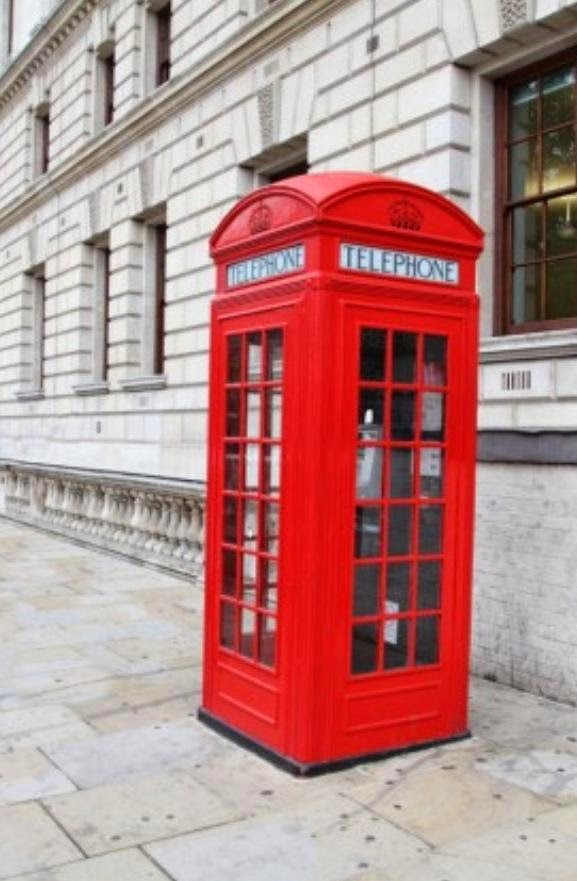
Le celebri cabine telefoniche rosse di Londra cambiano colore e funzione. Cadute praticamente in disuso, - riconvertite a volte come piccole biblioteche o come strutture dotate di apparecchiature mediche di emergenza -, questi elementi storici della capitale londinese rinascono a nuova vita: diventano verdi e si trasformano in cabine di ricarica a energia solare per i propri dispositivi elettronici.
Ricariche gratuite: l’idea delle SolarBox, questo il nome delle nuove cabine, è di due giovani sviluppatori, Harold Craston e Kirsty Kenney, ex studenti della London School of Economics. Le cabine potranno essere utilizzate gratuitamente, ma durante tutto il tempo della carica degli annunci pubblicitari sfileranno davanti agli occhi degli utenti.
Kirsty Kenney ha così rilasciato in un'intervista: "Ci piacerebbe far parte del viaggio di Londra verso una economia più verde, magari per fornire altri punti di ricarica, magari non solo nelle cabine del telefono, e far sì che l'energia rinnovabile sia alla portata di tutti. Fornire una soluzione pubblica a un problema pubblico".

lunedì 10 novembre 2014

Written by Fei Fei

August 14, 2003, North America.  During a high power demand day a minor grid line in Ohio overheated; the operators’ unawareness of this line failure turned the relatively insignificant local blackout into a widespread power outage.  At that time, it was the second large blackout in the world, which affected the Northeastern and Midwestern United Sates and the Canadian province of Ontario.
This type of costly disruptions  remind us of  how our electric power infrastructure, the grid that since the late XIX century has been transmitting electricity , is rapidly running up against its limitations and why a new and more flexible system  of transmission is required.  Grid operators have limited control and information about how energy is flowing through the system making more difficult and costly to redistribute the power.  What we need and what we can actually implement is a set of technologies, applications and devices that change the traditional electric grid from a centralized producer-controlled network to a more decentralized and consumer interactive one.  New technologies that sample the voltage many times per second, provide snapshot of the power system, which enable operators and software to constantly monitor the distribution process. We are talking of a set of software, computers, sensors that not only can detect in real time any malfunction and disturbances in the system and provide a quick automatic response, but also manage the peak and low demand according to a more intelligent energy-saving scheme. We are talking about SMART GRID indeed. The benefits of Smart Grid go beyond the distribution process as follows:
• More efficient transmission of electricity and reduction of peak demand
• Quicker restoration of electricity after power outage
• Reduced management costs for utilities, and eventually lower power costs for consumers.

Easing the storage of electricity is a key point. Think of the renewable energy, the solar or wind power for instance; they are free, environment-friendly, potentially unlimited resources and yet account, not considering hydropower, for around 6% in the electricity production, which consume up to 40% of American sources. The main reason for this is the variability of these sources. Although they can yield high voltage, they are not constant, the spread due to weather condition and day-night turnover for instance makes them difficult to be fully exploited.  Smart Grid can help to smooth out the volatility and better allocate the flow of energy from the renewable sources plants by storing excess energy. In addition, utilities are more encouraged to involve consumers through strengthening net metering programs, which are programs that allow the flow back of energy in the grid as credit for the consumer who produces electricity on his own (just think at rooftop solar system).
Therefore, other relevant benefits are:
• Increased integration of renewable energy systems
• Better integration of customer-owner power generation systems, including renewable energy systems
• Eventually reduced carbon footprint.

In conclusion, Smart Grid is a facility that can really have an impact on energy issues and our life; so I warmly invite you to join us at the conference we are organizing to address this topic. In the meanwhile have a look at this web site and enjoy the videos for additional details!

venerdì 7 novembre 2014

Written by Carlotta Werth


Here's a small guide on the first steps towards starting a smart, green student life.
It's easy. Because being green is a benefit not only for the environment and society, but also for your pocket, and your personal well-being.

Have a look at this 7 suggestions.

1) Take on a minimalist lifestyle
- A hip, inspirational style to decorate your house? Nothing better than zen. Because:
Few objects = More order + Less time in cleaning + Less money spent on decorating + Less useless stuff to throw away = Greater inner peace.
So, buy only what you really need.
- Buy second-hand. It’s cool, unique and cheap.
- Swap wardrobes with your friends for a night out. It's exactly like having new, beautiful clothes, but no problems with overstuffed closets.

2) Re-sell
What you don’t need any more.

3) Shop smart
- Bring your own bags. They’re resistant, ecological and they look much better.
- Buy yourself a fancy soap container and then refill it with the huge packages you find at the supermarket.
- Avoid food with loads of packaging.
- Buy maxi size packages. For instance, if you eat yogurt everyday, simply purchase one maxi size container which will last you for the whole week.
- Stop using disposable items!

4) Walk
- Instead of public transport or cars, use your legs. It improves your body and clears the mind. Taking long walks is a widespread anti-stress pratice. Very useful when studying for exams.
- Use the stairs, not the lift. It takes less time, and you save a lot of energy. Spare the morning queue in front of the lift for when you'll be old and your legs really won't sustain you for those two floors of stairs.

5) Save the forests
- Print double-sided.
- Use recycled paper.
- Go digital (scan, print as few slides and documents as possible).

6) Save water
- When you do the laundry, always wash full loads of clothes.
- Remember to turn off water while you brush your teeth or shampoo your hair.
- Did you know it? You can clean your windows with vinegar. They'll shine as never before.

7) Energy
- Use natural light as long as you can. For example, study close to a window. It also improves your mood.
- Remember to turn off your devices (laptop, tv, mobile) when you know you won't use them for a long period of time.
- Always switch off the lights when you walk off a room.
- Dry your hair in the open air. It'll look fabulous, and be less damaged.
-If you’re cold, put on a sweater. Cool air keeps you awake and concentrated. And it makes you burn more calories.
-If you’re warm, before turning on the air-con, open the windows, and make yourself a glass of fresh water with ice cubes and lemon juice.
-Air your home once a day: keep all windows open for 5 minutes. Temperature and moisture inside the house will be more balanced.
- When cooking, put lids on your pots. Water boils faster, food cooks in a minute and you’ll save a lot of energy.

lunedì 3 novembre 2014

written by Valentina Rutigliano

The Universal Exposition is a cultural exhibition that aims at being the expression and the testimony to its own age. Ideally, it should promote communication and cooperation among people and nations on a globally crucial and significant issue, so as to improve human condition and exchange knowledge, projects and ideas. As most of you already know, the theme chosen for Expo 2015 is Feeding the Planet, that is how to create the conditions to guarantee everyone sufficient and good-quality food, preserving at the same time resources for the next generations.
Since in these days the work for the pavilions is in progress, and the first reports are being let out, it’s interesting to start looking at some examples of how the nations that will partake in the World’s Fair are interpreting and developing the concept of sustainability and resource-saving with their architectonic projects.
Malaysian pavilion, for example, has the shape of a rice grain and the seeds that generate the rain forest trees. The structure is made of glued laminated timber –sometimes called Glulam- that reduces the overall amount of wood used when compared to solid sawn timbers, without relying on old-growth trees. The ramps that link the seeds with one another will be made of rice chaff (the “peel” of the grain) that is discarded in the refining process. Since chaff is rich in silicon oxide, a fundamental component of concrete, its potential as construction material has been well known for decades, but only in recent years researchers have actually managed to produce this ecological concrete.
China, which is building the second biggest pavilion after Germany, has thought of a natural and harmonic location, where the daylight and the air that penetrate from the central hole reduce the airing and ventilation consumption. The heart of the structure is supposed to be surrounded by a giant plant-wall cylinder.
In general, the tendency seems to be towards recycled and recyclable materials (the latter is the case of Azerbaijani pavilion, made of 100% recyclable wood and crystal balls) and energy-saving-oriented solution. The Swiss project stands out by creativity and originality: four 14-meters-tall towers will be filled up with water, salt, coffee and dried apple slices respectively, representing Swiss sustainability, responsibility, innovation and tradition. Visitors can make use of the products, but as they do so, the platforms that sustain the towers sink, modifying the structure of the pavilion. Since the towers will not be refilled during the event, the visitors are led to mind their consumption patterns: the more they will grab, the less will be available to others.

Finally, I cannot go on without mentioning Palazzo Italia, one of the few buildings that will be a permanent legacy of the Universal Exposition. Its structure, that imitates a forest, encompasses experimental and innovative solutions about renewable energies. The engineer that dealt with the energetic part of the project defines the Italian pavilion as “an energy accumulator in which the casing is also an active part of the production”. In fact, the panels of the architectonic forest will be made of a special biodynamic cement that looks like marble and is composed by 80% of recycled materials, and, above all, when hit by sunlight its “Tx Active” principle captures some of the polluting agents of the air, helping keep it free from smog. Unfortunately, the engineers have already said that some solutions will not be implemented due to the short time by which the building needs to be ready. The cutting-edge project would have been an experimental example of great international visibility; for sure, this will remain one of our great regrets related to the questionable way we have managed the Expo.

domenica 2 novembre 2014

written by Maria Carolina de Vera


Sustainable living is as important as hard to implement in our life. However, we don’t have to do all alone. There are companies that, helped by International Organisations or any NGO that has this as main purpose, could really simply our effort to be more critical citizens.
Just to give an example, the famous supermarket Auchan that in Italy is pretty known, is changing its way of operating, dealing with energy, water and production of CO 2 . In addiction to that, it’s trying also to inspire the use of those parts of food that normally are thrown away. There is one book that has been written for this occasion: “Buttiamoli in Pentola”, and it lists 5 recipes of a famous eco-food blogger, Lisa Casali, and 65 recipes of normal people that shared their against-wasting ideas on www.insiemecontroglisprechi.it . The book teaches you how to use every single part of ingredients and you’ll find it in each Auchan hypermarkets.

If you want to know more about Lisa Casali, this is her english-version blog: http://ecocucinaen.wordpress.com/ . She also suggests a surprising energy-saving way of cooking: using the dishwasher machine!!
Here an italian video of her describing the preparation of cuscus with radicchio and beet with the dishwasher:

How much it’s important to reduce waste is nothing new, and it gets more and more important with a world population expected to keep growing in the next decades. It has been said that food production needs a 60-70% increase in the next years, but globally speaking 1/3 of produced food is thrown away still edible. Only by reducing this waste, we could feed 2 billion people. Waste is related to all the steps that take our breakfast or lunch or dinner on our tables. We strongly need to rethink about that and help those companies that are stepping forwards.

An other good example of a company committed to lessen its impact is Sofitel, especially known for its Regina paper rolls. In 2008 they decided to joint WWF Climate Saver group, and recently they hit the mark of reducing CO 2 emission production by 11%.
Good job Sofitel!